Today In History. 

The Boston Tea Party

On this day in 1773, a group of men dressed in Mohawk headdresses and cheered by a crowd of thousands threw tea belonging to the British East India Company into Boston Harbor. Britain’s punitive response to the Boston Tea Party, which was a protest against taxes, helped push American colonists closer to war. 1773. 

Members of the Pakistani Taliban carried out a terrorist attack on a school in Peshawar, killing 150 people, at least 134 of whom were students. 2014. 

Paul Castellano, who was reportedly the “boss of bosses” of the Mafia‘s Five Families, was fatally shot in New York City. John Gotti was later convicted of arranging the murder. 1985. 

During World War II, German forces attempted to push through Allied lines in the Ardennes, beginning the Battle of the Bulge. 1944. 

More than 3,000 people were killed by a major eruption of Mount Vesuvius. 1631. 

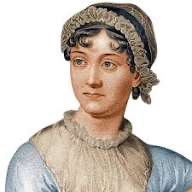
Jane Austen (born December 16, 1775, Steventon, Hampshire, England—died July 18, 1817, Winchester, Hampshire) was an English writer who first gave the novel its distinctly modern character through her treatment of ordinary people in everyday life. She published four novels during her lifetime: Sense and Sensibility (1811), Pride and Prejudice (1813), Mansfield Park (1814), and Emma (1815). In these and in Persuasion and Northanger Abbey (published together posthumously, 1817), she vividly depicted English middle-class life during the early 19th century. Her works defined the era’s novel of manners, but they also became timeless classics that remained critical and popular successes for more than two centuries after her death.

Today In History. 

The Iraq War officially ended when the United States formally declared that its mission in Iraq was over. 2011.

The Leaning Tower of Pisa reopened in Pisa, Italy, after more than 10 years of work to stabilize the structure. 2001. 

The U.S. Department of Defense ordered that all Americans in its service (about 2.5 million people) be inoculated against anthrax, a potential weapon of biological warfare. 1997. 

Janet Jagan was elected president of Guyana, becoming the first elected female president in South America and the first white president of Guyana. 1997.

Antigovernment demonstrations erupted in Timișoara, Romania, beginning the revolution that toppled the communist leader Nicolae Ceaușescu from power a few days afterward. 1989. 

The Lakota (Teton) chief Sitting Bull was killed on the Grand River in South Dakota by Native police and soldiers who had been sent by the U.S. government to arrest him so as to prevent him from leading an insurrection. 1890. 

Today In History.

The 6-day-old queen

Mary became queen of Scotland when her father, King James V, died on this day in 1542. She was six days old. 1542.

A mass shooting at Sandy Hook Elementary School in Newtown, Connecticut, left 20 children and 6 adults dead. 2012.

The convention establishing the Organisation for Economic Co-operation and Development was signed by 18 European countries, the United States, and Canada. 1960. 

Roald Amundsen—traveling with 4 companions, 52 dogs, and 4 sledges—became the first explorer to reach the South Pole. 1911. 

George VI, who became king of the United Kingdom on December 11, 1936, following the abdication of the throne by his brother Edward VIII, was born. 1895. 

Nostradamus, an astrologer, physician, and the most widely read seer of the Renaissance, was born in Saint-Rémy, France. 1503. 

Dilma Rousseff (born December 14, 1947, Belo Horizonte, Brazil) is a Brazilian politician who in 2011 became Brazil’s first female president. She was reelected in 2014 but impeached and removed from office in 2016.

Today In History.

A pope resigned to save his soul

After five months as pope, Celestine V resigned on this day in 1294. Because he was struggling to fulfill his duties, after many years living as a hermit in a cave, he decided it would be dangerous for the church and for his soul if he continued. 1294 

Iraqi President Saddam Hussein was captured by U.S. forces during the Iraq War; three years later he was found guilty of crimes against humanity and was executed. 2003. 

Taylor Swift, one of the most influential and successful artists in contemporary music, was born in West Reading, Pennsylvania. 1989. 

The Japanese Imperial Army seized Nanjing, China, during the Sino-Japanese War, and carried out the Nanjing Massacre, which resulted in the deaths of as many as 300,000 Chinese citizens and soldiers. 1937. 

British astronomer J.P.M. Prentice discovered Nova Herculis, one of the brightest novas of the 20th century. 1934. 

The Four-Power Pact was signed during the Washington Conference by the United States, Great Britain, Japan, and France, stipulating that all the signatories would be consulted in the event of a controversy between two of them over “any Pacific question.” 1921. 

The Battle of Fredericksburg, a bloody engagement of the American Civil War in which Confederate troops were led to victory by General Robert E. Lee over the Union forces of General Ambrose Everett Burnside, was waged. 1862. 

Dutch navigator Abel Tasman became the first European to sight South Island, New Zealand. 1642. 

Today In History.

The first motel

The world’s first motel opened on this day in 1925. Located in San Luis Obispo, the Milestone Mo-Tel gave motorists a place to stop as they drove between San Francisco and Los Angeles. 1925. 

The U.S. Supreme Court ruled that a fair recount of ballots in Florida could not be performed by the deadline for certifying the state’s electors, effectively ending the 2000 U.S. presidential election and awarding the presidency to George W. Bush. 2000. 

American author Joseph Heller—the author of Catch-22 (1961), one of the most significant works of protest literature to appear after World War II—died at age 76. 1999. 

Kenya became a republic on the first anniversary of its independence from Britain. 1964. 

Chinese Nationalist leader Chiang Kai-shek was seized by one of his own generals, Chang Hsüeh-liang, beginning the Xi’an Incident. 1936. 

Singer Frank Sinatra, who also achieved wide success as a film actor, was born in Hoboken, New Jersey. 1915. 

Today In History.

Today in History: $5.8 million stolen

Cash and jewels worth more than $5 million were stolen from an air cargo building at John F. Kennedy International Airport in New York City on this day in 1978. Only one person was ever convicted in connection with the Lufthansa heist, and almost none of the stolen money was recovered. 1978.

The Judiciary Committee of the U.S. House of Representatives recommended three articles of impeachment against President Bill Clinton, to which would be added a fourth article the following day, for actions taken in connection with his affair with White House intern Monica Lewinsky. 1998. 

Russian troops invaded Chechnya in an effort to suppress the government led by Dzhokhar Dudayev, who, as the republic’s president, had declared Chechnya’s independence in 1991. 1994. 

American boxer Muhammad Ali fought his last professional bout, losing to Trevor Berbick in a decision. 1981. 

Apollo 17 astronauts Eugene Cernan and Harrison Schmitt became the last humans to walk on the Moon. 1972. 

UNICEF—a United Nations program devoted to improving the health, nutrition, education, and general welfare of children—was established.1946. 

Adolf Hitler declared that Germany was at war with the United States following Japanese attacks on the U.S., British, and Dutch positions in the Pacific and in East Asia. 1941.

Edward VIII‘s abdication as king of the United Kingdom was formally approved. He is the only sovereign to voluntarily resign the British crown, which he did to marry American divorcée Wallis Warfield Simpson. 1936. 

Today In History.

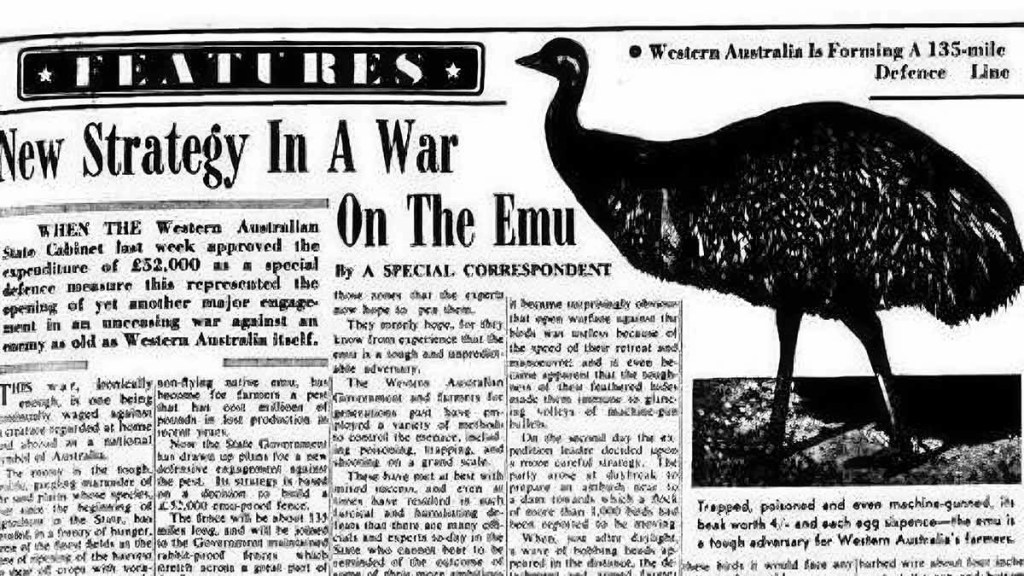
The Emu War

The Australian government officially surrendered on this day in 1932 after a monthlong battle against thousands of large flightless birds.1932. 

Argentine politician Cristina Fernández de Kirchner was sworn into office as Argentina‘s first female elected president; she succeeded her husband, Néstor Kirchner. 2007. 

Chilean General Augusto Pinochet, whose dictatorial reign (1974–90) in Chile was marked by the murder and torture of political opponents, died while facing charges of human rights abuses. 2006. 

President Nelson Mandela signed a new constitution that completed a transition from a long period of white minority rule (apartheid) to full-fledged democracy in South Africa. 1996. 

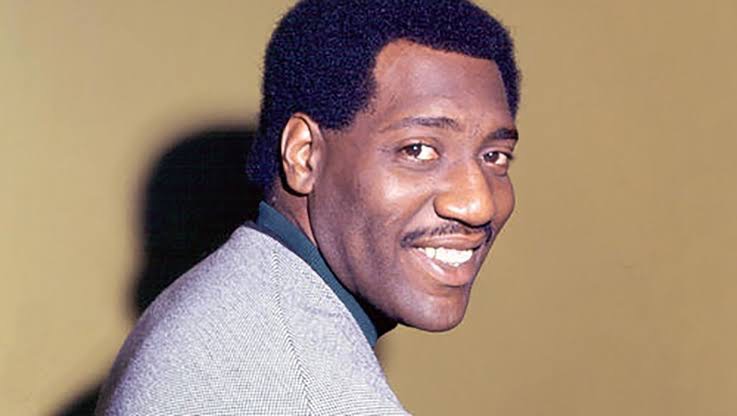
Otis Redding, who was one of the great soul stylists of the 1960s, died in an airplane crash. 1967. 

The General Assembly of the United Nations adopted the Universal Declaration of Human Rights. 1948. 

The first Nobel Prizes were distributed, marking the fifth anniversary of the death of Alfred Nobel, the Swedish industrialist and inventor of dynamite, who founded and endowed the awards through his will. 1901. 

Representatives of Spain and the United States signed the Treaty of Paris, concluding the Spanish-American War. 1898. 

Ada Lovelace, who is often considered the first computer programmer, was born in what is today London. 1815. 

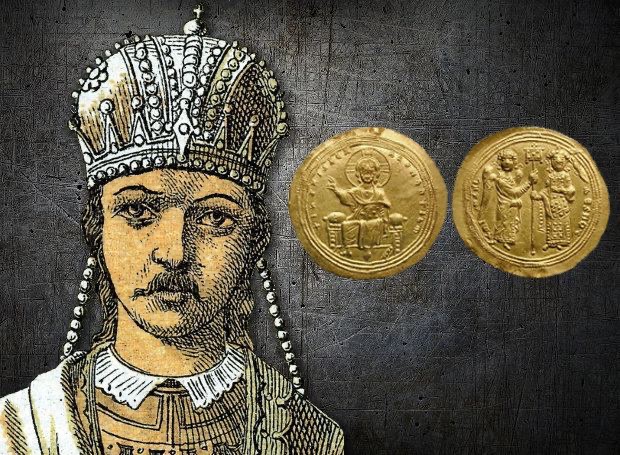
Michael V Calaphates ascended the throne of the Byzantine Empire following the death of Michael IV. 1041. 

Today In History.

Lech Wałęsa elected president of Poland

On this day in 1990, Lech Wałęsa—who had led Solidarity, Poland‘s first independent trade union, and had received the Nobel Prize for Peace in 1983—won Poland’s first direct presidential election by a landslide. 1990. 

South Korean President Park Geun-Hye was impeached by the National Assembly amid allegations of corruption; she left office the following year, after the country‘s Constitutional Court upheld the parliamentary decision. 2016. 

Some 10 years after the World Health Organization began a global vaccination program against smallpox, the disease was officially declared eradicated. 1979. 

The animated special A Charlie Brown Christmas, featuring characters from Charles Schulz‘s popular Peanuts comic strip, first aired on American television, and it became a holiday classic. 1965.

Tanganyika became independent, with Julius Nyerere as its first prime minister, and in 1964 the territory united with the island of Zanzibar to form Tanzania. 1961 

The world’s first traffic light was erected near Westminster Bridge in London; however, it was removed a month later after a gas leak caused one of the lights to explode. 1868. 

Revolutionary forces under the leadership of Venezuelan Antonio José de Sucre defeated the Spanish royal army at the Battle of Ayacucho. 1824. 

Today In History.

John Lennon fatally shot

On this day in 1980, British musician John Lennon—who rose to fame with the Beatles and had a successful solo career—was fatally shot by Mark David Chapman in New York City, causing a global outpouring of grief. 1980. 

American pop star Taylor Swift staged the 149th and final show of her Eras Tour, which sold a record-setting $2 billion in tickets. 2024. 

After 13 years of civil war in Syria, Bashar al-Assad was ousted as the country’s leader; his attempt to repress the uprising against his rule included brutal tactics, most infamously the use of chemical weapons. 2024. 

SpaceX became the first commercial company to release a spacecraft—the Dragon capsule—into orbit and successfully return it to Earth. 2010. 

U.S. President Ronald Reagan and Soviet General Secretary Mikhail Gorbachev signed a nuclear weapons reduction treaty. 1987. 

English sociologist and philosopher Herbert Spencer, who introduced the term “survival of the fittest,” died in England. 1903. 

Nicki Minaj (born December 8, 1982, St. James, Trinidad and Tobago) is a Trinidadian-born rapper, singer, songwriter, television personality, and actress known for her flowing quick-spoken rap style and for her provocative lyrics. She complements her music with a bold persona that includes colorful wigs and risqué clothing.

Today In History.

Pearl Harbor attack

On this day in 1941, Japanese bombers launched a surprise aerial attack on the U.S. naval base at Pearl Harbor on the island of Oahu, Hawaii, precipitating the entry of the United States into World War II. 1941.

American aviator Chuck Yeager, the first person to exceed the speed of sound in flight, died at age 97. 2020. 

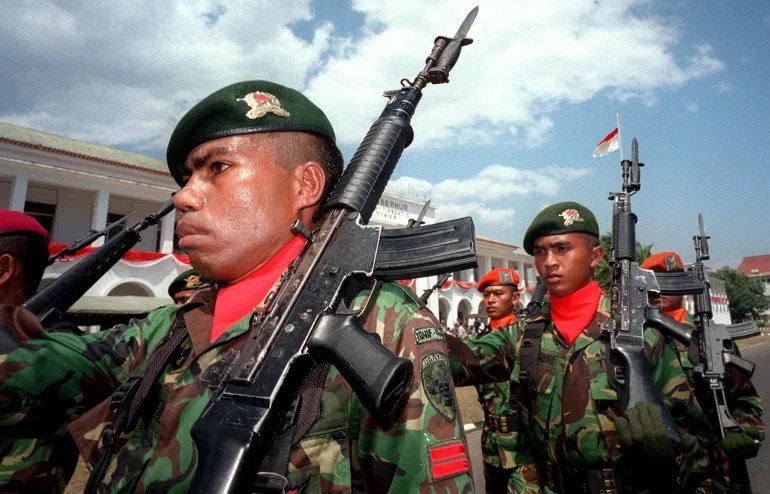
Shortly after declaring its independence, East Timor was invaded and occupied by Indonesian forces. 1975. 

Adolf Hitler issued his Night and Fog Decree, a secret order for the arrest and execution of “persons endangering German security.” 1941. 

The United States declared war on the Austro-Hungarian Empire during World War I. 1917.

Today In History.

Irish Free State established

Representatives of the British government and Irish leaders Arthur Griffith, Michael Collins, and others signed the Anglo-Irish Treaty this day in 1921, concluding the Irish War of Independence and establishing the Irish Free State. 1921. 

NASA released images—taken by the Mars Global Surveyor—that indicated the relatively recent presence of water on Mars. 2006. 

The Babri Masjid (“Mosque of Bābur”) in Ayodhya was destroyed by Hindu nationalists, leading to riots throughout India that killed more than 2,000 people. 1992. 

Gerald Ford was sworn in as vice president of the United States, succeeding Spiro Agnew, who had resigned. 1973. 

Finland declared itself independent of Russia, following the Bolshevik Revolution. 1917. 

A bust of Nefertiti was discovered during excavations at Tell el-Amarna, Egypt. The sculpture later went on display in a Berlin museum, and it became a source of controversy as an alleged plundered artifact, provoking calls for its repatriation. 1912. 

King Henry VI of England was born in Windsor, Berkshire.1421. 

Today In History.

Witchcraft condemned by Pope Innocent VIII

Innocent VIII condemned witchcraft this day in 1484 via papal bull, and subsequently he dispatched inquisitors to Germany to try witches and persecuted a chief exponent of Renaissance Platonism, Giovanni Pico della Mirandola.1484 

The International Olympic Committee banned Russia from the 2018 Winter Games in P’yŏngch’ang, South Korea, after uncovering a Russian state-sponsored doping program. 2017. 

South African nationalist and statesman Nelson Mandela, who helped end the country‘s apartheid system of racial segregation and ushered in a peaceful transition to majority rule, died at age 95. 2013. 

Fijian military leader Frank Bainimarama became acting president of the island country following a coup. 2006.

A lethal smog began blanketing London, causing thousands of deaths; the incident prompted passage of the Clean Air Act. 1952. 

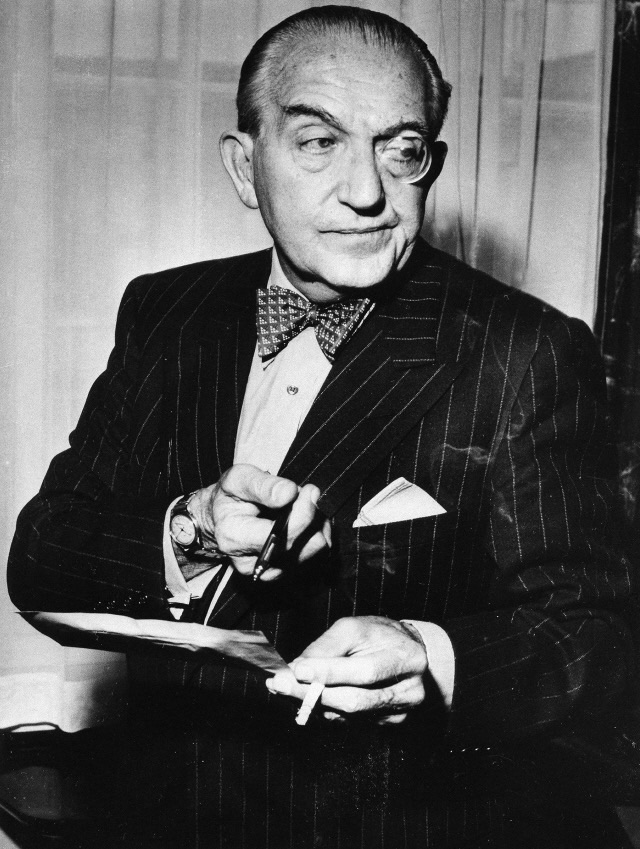
Director Fritz Lang—whose films, dealing with fate and man’s inevitable working out of his destiny, are considered masterpieces of visual composition—was born in Vienna. 1890. 

In his annual message to Congress, U.S. President James K. Polk confirmed the discovery of gold in California, helping to spark the Gold Rush, which brought an estimated 300,000 people to the territory. 1848. 

Austrian composer Wolfgang Amadeus Mozart died in Vienna at age 35. 1791. 

In his greatest victory, Prussian King Frederick II (the Great) defeated the Austrians at Leuthen during the Seven Years’ War. 1757.

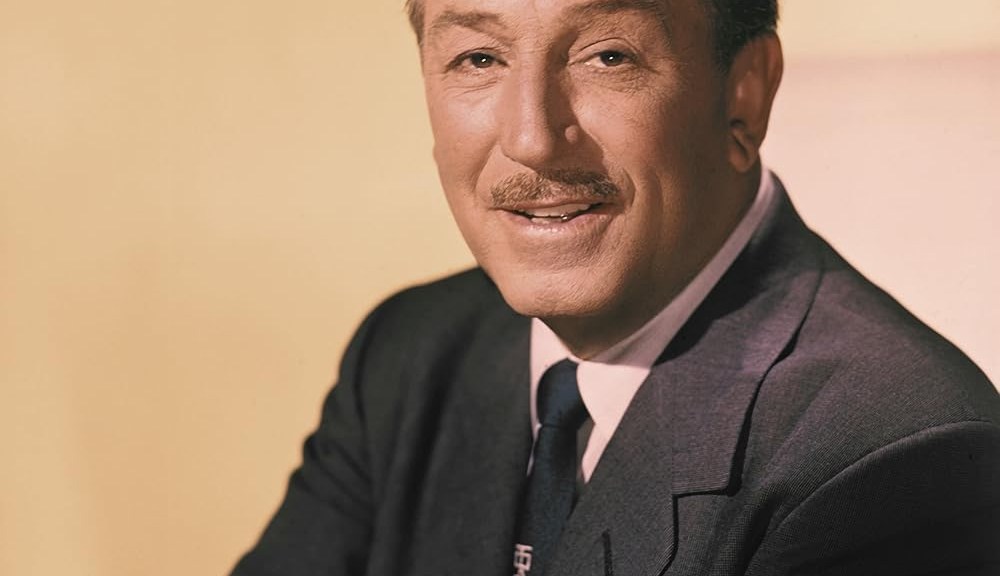
Walt Disney (born December 5, 1901, Chicago, Illinois, U.S.—died December 15, 1966, Burbank, California) was an American motion-picture and television producer and showman, famous as a pioneer of animated cartoon films and as the creator of such cartoon characters as Mickey Mouse and Donald Duck. He also planned and built Disneyland, a huge amusement park that opened near Los Angeles in 1955, and before his death he had begun building a second such park, Walt Disney World, near Orlando, Florida. The Disney Company he founded has become one of the world’s largest entertainment conglomerates.

Today In History. 

Ivan the Terrible proclaimed grand prince of Moscow

On this day in 1533, the three-year-old who became Ivan the Terrible was proclaimed grand prince of Moscow upon the death of his father, Grand Prince Vasily III, with his mother ruling in Ivan’s name until her death in 1538. 1533. 

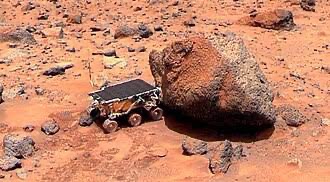
The unmanned space vehicle Mars Pathfinder was launched from Cape Canaveral, Florida, in order to explore the surface of Mars. 1996. 

Several months after the death of drummer John Bonham, the British rock band Led Zeppelin announced that it was officially disbanding; the group later re-formed for short one-off performances on several occasions. 1980. 

American civil rights leader Fred Hampton, a charismatic member of the Black Panthers, was shot and killed during a police raid in Chicago; his death caused public outrage, and the ensuing investigations brought greater scrutiny of the FBI‘s attempts to dismantle the Panthers and other Black organizations. 1969. 

Jeff Bridges—an American actor known for his laid-back personality and his versatility—was born. 1949. 

U.S. President Woodrow Wilson departed for France to attend the Paris Peace Conference, where, following the cessation of hostilities in World War I, the League of Nations was established and the Treaty of Versailles was drafted. 1918. 

Today In History. 

Gas leak in Bhopal, India

On this day in 1984, a gas leak from a Union Carbide plant in Bhopal, India, spread over a populated area, resulting ultimately in 15,000 to 20,000 deaths and leaving some half million survivors with chronic medical ailments. 1984. 

Gwendolyn Brooks, a Pulitzer Prize-winning poet who spoke of and to the everyday struggles and triumphs of African Americans, died in Chicago. 2000. 

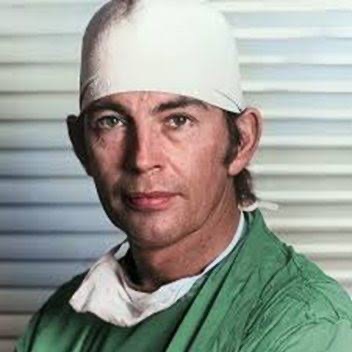
Christiaan Barnard of South Africa performed the first human heart transplant, at Groote Schuur Hospital in Cape Town. 1967. 

Anna Freud, a founder of child psychoanalysis and one of its foremost practitioners, was born in Vienna. 1895. 

German composer Johann Sebastian Bach married his second wife, Anna Magdalena Wilcken, the daughter of a trumpeter at Weissenfels. 1721. 

Today In History. 

Monroe Doctrine

The Monroe Doctrine, which declared that the U.S. would not interfere in European affairs but that its sphere of interest included the entire Western Hemisphere, was enunciated by President James Monroe this day in 1823. 1823. 

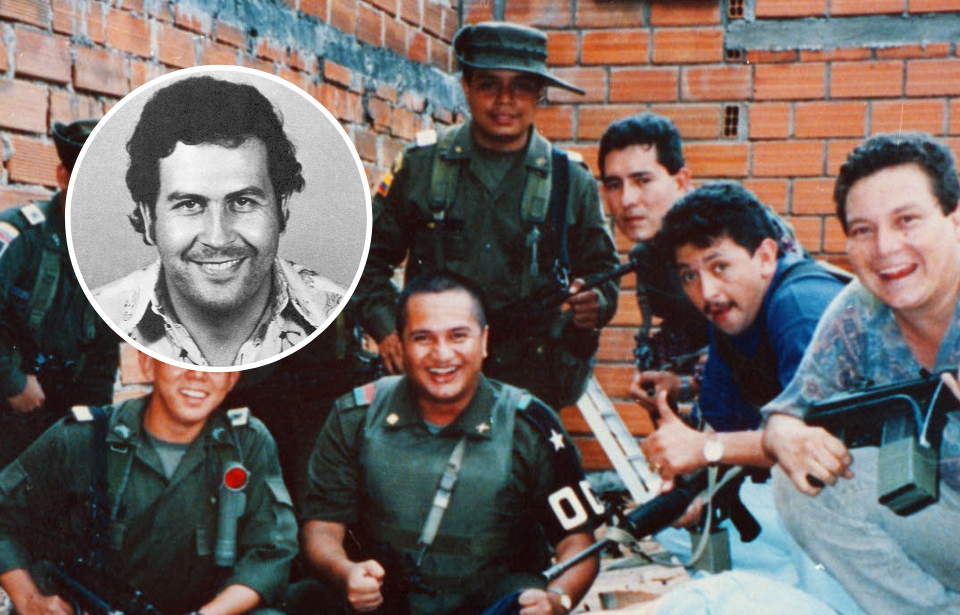
Colombian criminal Pablo Escobar—who, as head of the Medellín cartel, was arguably the world’s most powerful drug trafficker in the 1980s and early ’90s—was killed during a shoot-out with authorities. 1993. 

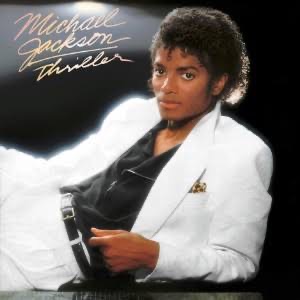
The groundbreaking music video for Michael Jackson‘s song Thriller aired on MTV. 1983. 

William C. DeVries implanted the first permanent artificial heart in Barney Clark; the aluminum and plastic device was called the Jarvik-7. 1982. 

American singer Britney Spears—who helped spark the teen-pop phenomenon in the late 1990s and later endured intense public scrutiny for her personal life—was born. 1981.

The United Arab Emirates was formed by the union of six small emirates on the Arabian Peninsula; a seventh emirate joined in February 1972. 1971. 

Scientists led by Enrico Fermi conducted the world’s first controlled self-sustaining nuclear chain reaction, at the University of Chicago. 1942. 

Napoleon crowned himself emperor of France in the presence of Pope Pius VII. 1804.

Today In History. 

Rosa Parks’s refusal to relinquish her bus seat

This day in 1955, in violation of segregation laws in Montgomery, Alabama, Rosa Parks refused to surrender her bus seat to a white passenger and was arrested, sparking a 381-day bus boycott led by Martin Luther King, Jr. 1955. 

Vicente Fox was inaugurated as president of Mexico, ending the dominance of the Institutional Revolutionary Party, which had ruled since 1929. 2000. 

The first World AIDS Day was held. 1988. 

The Antarctic Treaty was signed by 12 countries, making the Antarctic continent a demilitarized zone to be preserved for scientific research. 1959. 

Germany, France, Belgium, Great Britain, and Italy signed the Pact of Locarno, a series of agreements intended to guarantee peace in western Europe. 1925. 

General Andrew Jackson, commander of the U.S. Army of the Southwest, hastened to defend New Orleans, Louisiana, against British invasion; a series of skirmishes over the next few weeks culminated in the Battle of New Orleans. 1814.

Today In History. 

Independence of Barbados

Barbados, an island nation in the Caribbean situated about 100 miles (160 km) east of the Windward Islands, had gained internal self-rule in 1961 and achieved its full independence from Britain on this day in 1966. 1966. 

The hunt for the Green River Killer ended as Gary Ridgway was arrested in Washington, and he later pled guilty to killing 48 women, though he claimed to have murdered as many as 80; he was the deadliest convicted serial killer in the United States. 2001.

Exxon and Mobil formally merged, becoming ExxonMobil, one of the world’s leading oil and energy businesses. 1999. 

A block of gray sandstone known as the Stone of Scone was returned to Scotland, 700 years after it had been taken to England as war booty by King Edward I. 1996. 

American singer and songwriter Michael Jackson released Thriller, which became the best-selling album in the world and won a record-setting eight Grammy Awards. 1982. 

After Finland refused to grant the Soviet Union a naval base and other concessions in the fall of 1939, Soviet troops totaling about one million men attacked Finland on several fronts, initiating the Russo-Finnish War. 1939. 

Politician Shirley Chisholm, the first African American woman to be elected to the U.S. Congress, was born. 1924. 

Britain and the United States signed the preliminary articles of the Treaty of Paris as part of the Peace of Paris, a collection of treaties concluding the American Revolution. 1782. 

Charles XII, king of Sweden, was killed during a siege of the fortress of Fredriksten, east of Oslo Fjord, ending Sweden’s “Age of Greatness.” 1718. 

Today In History. 

United Nations approves resolution for the partition of Palestine

On this day in 1947, the United Nations General Assembly passed Resolution 181, which called for the partition of Palestine into Arab and Jewish states and for placing the city of Jerusalem under a special international regime. 1947. 

Henry Kissinger, who was one of the most influential and controversial diplomats during the second half of the 20th century, died in Connecticut at age 100. 2023. 

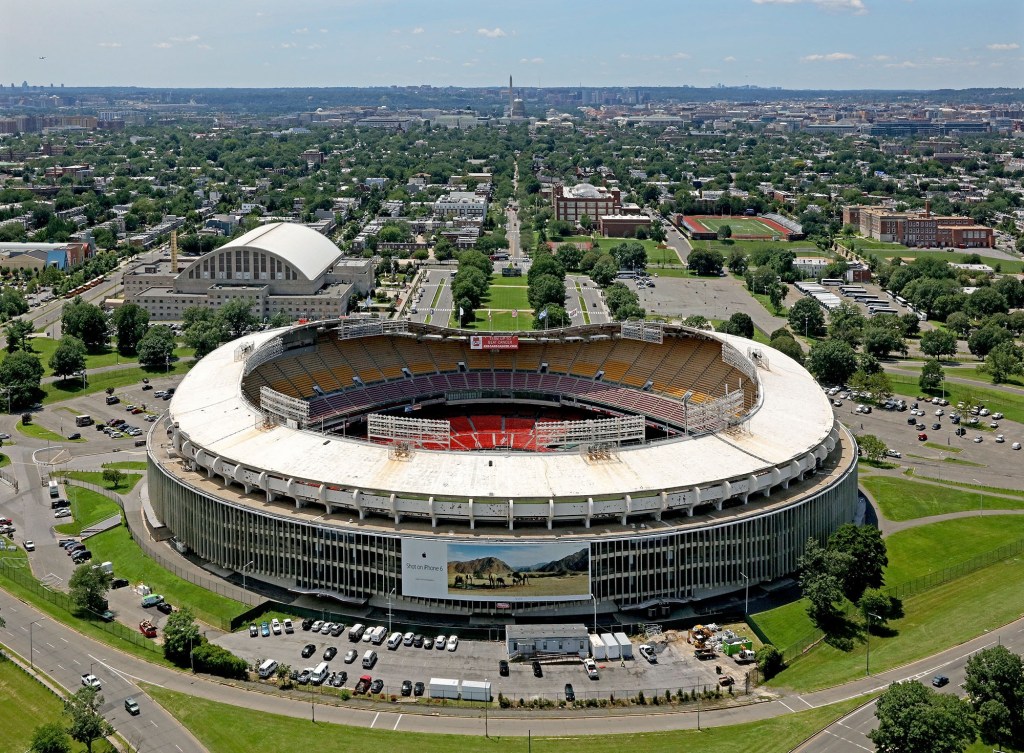
In a ceremony that was broadcast around the world by satellite, some 28,000 couples gathered at RFK Stadium in Washington, D.C., for a “wedding” conducted by Sun Myung Moon, leader of the Unification Church. 1997. 

U.S. President Lyndon B. Johnson appointed the Warren Commission to investigate the assassination of John F. Kennedy. 1963. 

Prussia and Austria signed the Punctation of Olmütz, an agreement regulating the two powers’ relations. 1850. 

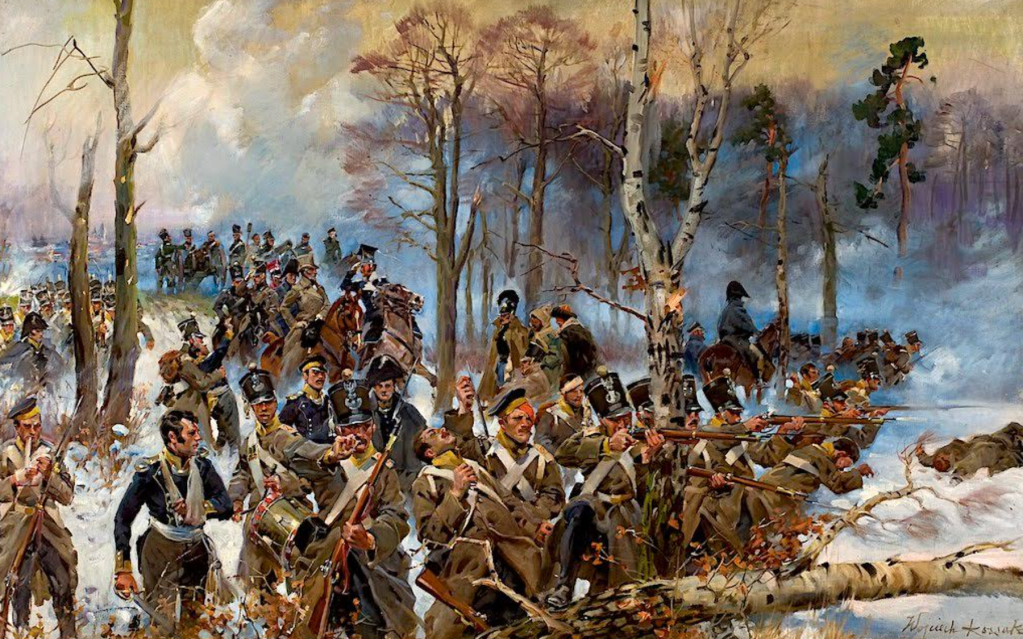
A Polish secret society of infantry cadets staged an uprising in Warsaw, beginning the November Insurrection. 1830. 

Today In History. 

Opening of Tehrān Conference

The Tehrān Conference, attended by U.S. President Franklin D. Roosevelt, British Prime Minister Winston Churchill, and Soviet Premier Joseph Stalin, at which Stalin pressed for an invasion of France, opened this day in 1943. 1943. 

Mauritania declared its independence and left the French Community. 1960. 

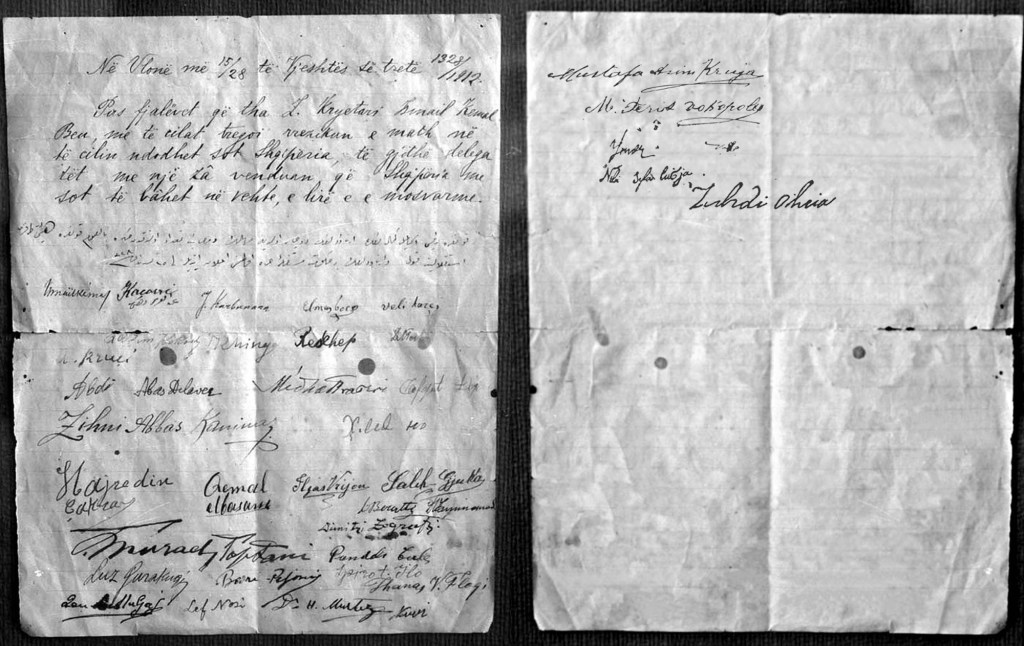
Albanian national delegates, led by Ismail Qemal, issued the Vlorë proclamation, which declared Albania‘s independence. 1912. 

Wilhelm Reiss became the first climber to reach the top of Cotopaxi, the world’s highest active volcano, in Ecuador. 1872. 

Famed English poet and dramatist William Shakespeare married Anne Hathaway. 1582. 

Today In History. 

Nobel Prizes established

Through the will drawn up by Alfred Bernhard Nobel—the Swedish chemist, engineer, and industrialist who invented dynamite and other, more powerful explosives—the Nobel Prizes were established on this day in 1895. 1895. 

The first Macy’s Thanksgiving Day Parade was held in New York City, and it became an American tradition, especially known for its huge balloons, which were introduced in 1927. 1924. 

Jimi Hendrix (born November 27, 1942, SeattleWashington, U.S.—died September 18, 1970, London, England) was an American rock guitarist, singer, and composer who fused American traditions of bluesjazzrock, and soul with techniques of British avant-garde rock to redefine the electric guitar in his own image.